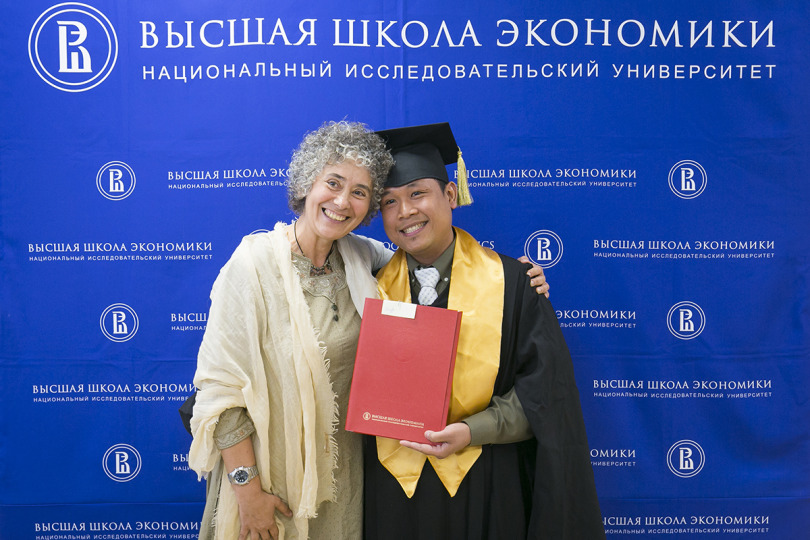
Political Analysis and Public Policy is the most popular Master’s programme among HSE’s international students. It draws people with professional experience as well as those fresh from Bachelor’s degrees to do research. Indra Prasetya Adi Nugroho is one of the 2015 new Master’s graduates. He came to HSE from a job in the Indonesian government.
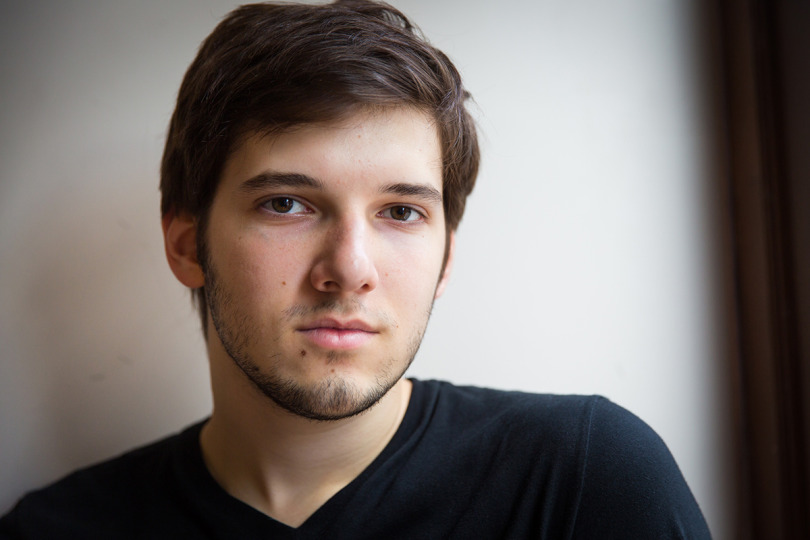
On 17th June in the Professors Hall at HSE Ilya Mochalov, second year Politics student at HSE and fourth year music student at the Tchaikovsky Conservatory in Moscow, gave a solo piano concert. Ilya has won a number of Russian and international prizes at music festivals and competitions. At the concert he played works by his favourite composer, Sergei Rakhmaninov.
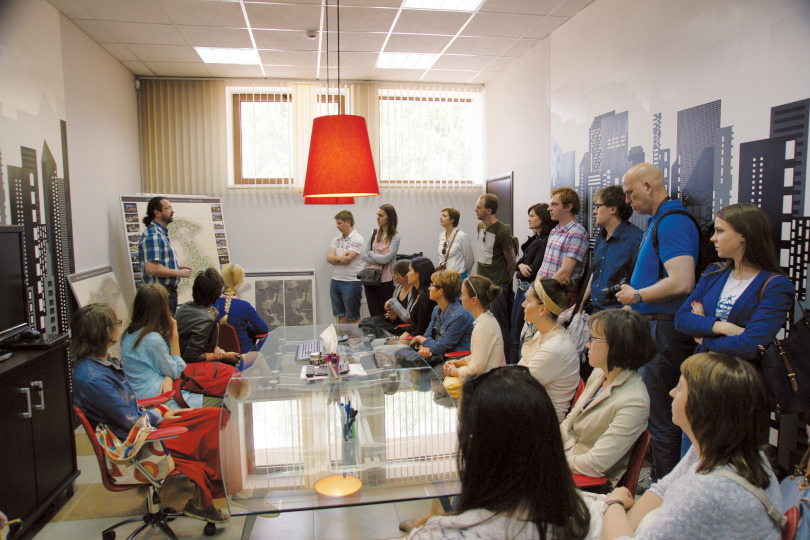
From June 7−12, 2015, the International Summer School on Sustainable Development of Urban Agglomerations took place as part of HSE’s cooperation with the Institute of International Education (Fulbright Programme). The summer school was organized by the HSE School of Public Administration together with the Fulbright Programme in Russia. This summer school was a continuation in a series of joint summer schools held with the Fulbright Programme (2012 and 2013) devoted to various aspects of theory and practice in sustainable development.
On June 4, 2015, Mattias Kumm, director of the Law Centre at the Social Science Research Center in Berlin and professor at New York University School of Law, read a lecture at the HSE Faculty of Social Sciences on ‘Liberal Constitutional Democracy 25 Years after the End of the Cold War’. The event was organized in conjunction with the Institute of Socio-Economic and Political Studies Foundation.
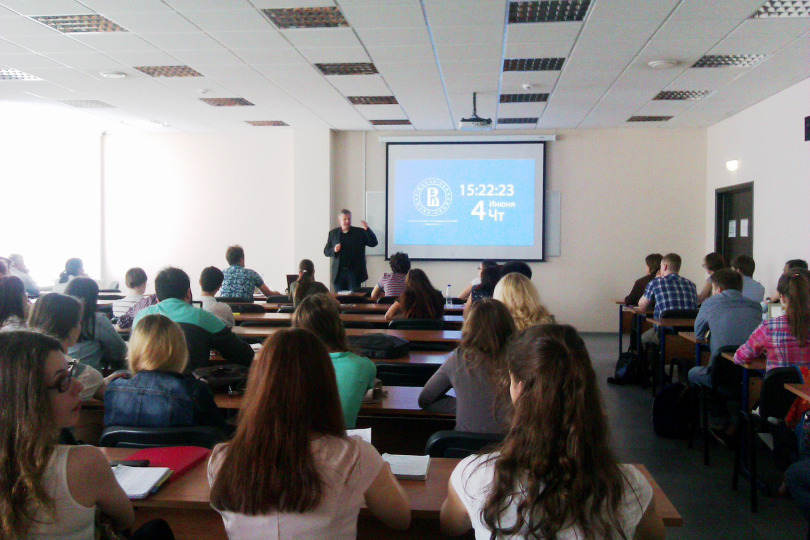
On June 4, Prof. Dr. Mattias Kumm, Managing Head of the Rule of Law Center at WZB Berlin Social Science Center and Professor of Law at New York University, will deliver a lecture at HSE entitled ‘Liberal Constitutional Democracy 25 Years After the End of the Cold War’, which is sponsored by the HSE Faculty of Social Sciences and the ISEPR Foundation. Professor Kumm, an internationally recognized expert on globalization and the rule of law, spoke briefly with the HSE news service ahead of his lecture on Thursday.
Emigration from Russia has changed significantly over the last decade. The potential for ethnic repatriation has almost been exhausted, but other factors have become stronger in the population outflow, such as reunion with families and trips for education. Such emigration is largely determined by differences in the quality of life and policies in host countries, which welcome young, educated, qualified people with a certain level of income, said Mikhail Denisenko, Deputy Director of the HSE Institute of Demography, in his presentation at the XVI April International Academic Conference at HSE.
Migrants from Central Asia in Moscow are often involved in hard physical work and live in bad conditions, both of which affect their health. But the access to medical aid is complicated for them due to their social isolation. As a result, foreign labourers use alternative strategies of therapy: from self-treatment, which is fraught with exacerbating the condition, to going to private ‘ethnic’ clinics. Daniil Kashnitsky, Assistant Researcher at the HSE Institute for Social Development Studies (ISDS), analyzed the medical aid for migrants in the Russian capital.
International companies engage in social responsibility in order to to improve their reputation, be more competitive, and to gain political benefits and some degree of control over society. In Russia, however, businesses convert social investment into informal privileges granted to them by government, according to a paper by Olga Kuzina, Professor of the HSE Department of Economic Sociology, and Marina Chernysheva, postgraduate student at the same department.
Vasily Klucharev, Leading Research Fellow at the HSE Centre for Cognition & Decision Making, and Anna Shestakova, Director of the Centre, have become co-authors of a chapter in ‘Brain Mapping’, a three-volume encyclopaedic collection.
A new academic journal, Russian Politics, has just been launched by Brill Academic Publishers (Leiden, Netherlands and Boston, USA). Three members of the editorial board are representatives of the Higher School of Economics — Professor Andrei Melville, Dean of Faculty of Social Sciences, Professor Nikolay Petrov and Professor Rostislav Turovsky. The first issue will be published in early 2016 and there will be four issues per year.