- A
- A
- A
- ABC
- ABC
- ABC
- А
- А
- А
- А
- А
3 Krivokolenny Pereulok, Moscow, 103070.
Phones:
8 (495) 772-95-90 *22833,
8 (495) 772-95-90 *22448
Fax: 8 (495) 772-95-90 *12556
Email: politfac@hse.ru
Washington: Free Russia, 2018.
Petrov N., Hale H. E., Lipman M.
Russian Politics. 2019. Vol. 4. No. 2. P. 168-195.
In bk.: Oxford Research Encyclopedia of Politics (Living Edition). Oxford University Press. P. 1-20.
Sorokina A., Maximenkova M., Kasamara V.
Political Science. PS. Высшая школа экономики, 2019. No. 71.

Professor William Bianco to Give a Talk on ‘The 2016 American Elections: What (If Anything) Can Political Science Tell Us?’
The School of Political Science of the Faculty of Social Sciences invite you to the lecture of Prof. William Bianco ‘The 2016 American Elections: What (If Anything) Can Political Science Tell Us?’.
Time: 1 Juny, 12:10 p.m.
Place: Ilyinka st. 13, room 504.
Language: English.
More than six months before Election Day, the 2016 election cycle has already been a humbling experience for American political scientists. A year ago, it was hard to find an elections scholar who thought Hillary Clinton would have trouble winning the Democratic presidential nomination – and no one thought of Donald Trump as a potential Republican candidate. How were we so far off base? Do our theories tell us anything about what happens now – from who is likely to win the general election to the likelihood of a full-scale realignment of parties and voters?
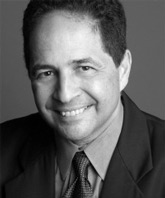
‘I'm a Professor of Political Science at Indiana University — Bloomington. My current research uses a tool for predicting majority rule decisions to understand institutional choices in legislatures, the evolution of parties and party systems, and responsiveness to citizen demands — in the US Congress, state legislatures, and countries throughout the world. I've also coauthored a textbook, American Politics Today. I've also been a member of the NSF Political Science Panel and am currently on the Editorial Board of American Journal of Political Science’.