
'Population, Public Health, and Development'
The HSE Faculty of Social Sciences, the Centre for Health Policy, the Institute for Social Policy, and the Vishnevsky Institute of Demography invite you to participate in the XII International Scientific and Practical Conference of Young Scientists, Postgraduate Students, and Students 'Population, Public Health, and Development.'
This conference is the twelfth in the 'Public Administration and Social Policy' series of annual all-Russian scientific conferences for young scientists, postgraduate students, and students and will be held on May 15–16, 2026.
Anyone interested in presenting research papers is welcome. The organising committee also encourages applications from applicants and students of the HSE Master's programmes 'Health Care Administration and Economics,' 'Public Administration,' 'Demography,' and 'Population and Development.'
The conference will be held both online and in person. Participants are kindly requested to indicate their preferred format in their application.
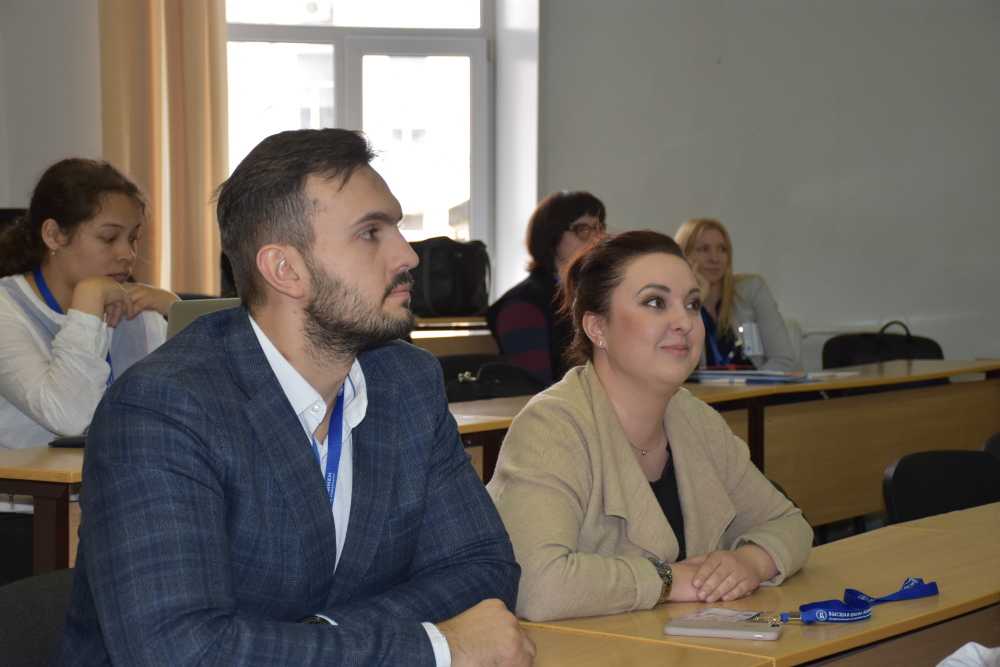
The following sections will be organised in 2026:
'Health and Mortality: New Challenges, Old Problems.' Session Chair: Valeriy Yumaguzin, Associate Professor of the Department of Demography, Research Fellow at the A.G. Vishnevsky Institute of Demography, Master's Programme in Demography.
'Strategic Goals and Priorities for the Development of Russian Healthcare. Improving the Quality and Accessibility of Medical Services and Pharmaceutical Provision.' Session Chair: Elena Tarasenko, Academic Mentor of the Master's Programme in Health Care Administration and Economics, Associate Professor of the Department of Health Care Administration and Economics.
'Current Issues of Social Policy.' Session Chair: Elena Selezneva, Associate Professor at the Institute for Social Policy, Supervisor of the Social Policy Track in the Master's Programme in Public Administration.
The conference programme is not limited to these sessions and includes many other topics.
The conference will discuss:
- Socioeconomic characteristics of demographic processes in Russia and abroad.
- The impact of demographic processes on the socioeconomic development of Russia and its regions.
- Issues in the quality of mortality and morbidity statistics.
- Approaches to assessing excess mortality and deteriorating health due to various sociodemographic, geopolitical, and climatic factors.
- Mortality from specific causes of death.
- The use of digital data to analyse health inequalities and mortality (VK, Google Trends, Yandex Wordstat, etc.).
- The impact of retirement on individual health.
- The development of a healthy lifestyle and the prevention of infectious and non-infectious diseases at the national and regional levels.
- Prospects for the development of the healthcare industry in Russia.
- The impact of new medical and information technologies on the organisation of healthcare delivery.
- The role of artificial intelligence and other digital innovations in ensuring the accessibility and quality of medical services.
- The role of marketing and advertising in the development of paid medical services.
- The search for new economic mechanisms for the development of public and private healthcare.
- The latest trends in healthcare management and social protection.
- The shortage of healthcare workers in urban and rural areas: the effectiveness of the proposed tools and measures to support healthcare workers.
- Improving the quality and accessibility of healthcare and social services.
- Directions and mechanisms for developing medical rehabilitation and social services for the disabled and chronically ill.
- Analysis of the socio-hygienic and professional-production characteristics of medical personnel.
- Corrective measures to prevent the impact of risk factors on various aspects of the health of the working population.
- Methods for monitoring and analysing public health.
- Improving measures and developing new approaches to prolonging the active professional longevity of the population.
- Organisational technologies for health preservation.
- Current challenges facing social policy and the social sphere.
- Potential for social policy to address socioeconomic problems.
- Challenges of social policy during economic sanctions.
- Social policy areas, measures, and tools to ensure the achievement of national goals to increase the birth rate, reduce mortality, improve the standard and quality of life of the population and foster harmonious, patriotic, and socially responsible individuals.
- Approaches to solving the socioeconomic problems of the population.
The conference is planned to be held in person with the option of remote participation.
Graduate students, research fellows, faculty, and undergraduate and graduate students who have completed original scientific research on the conference topic are welcome to participate in the conference. Authors must be under 39 years of age, each paper may have no more than three authors, and one person may author or co-author no more than two papers presented at the conference.
The three best papers in each session will be awarded diplomas. All participants will receive certificates.
Conference applications and abstracts are accepted electronically (submit to conferenceGMU@hse.ru) until April 27, 2026. The application must contain a brief CV (full name, email address, place of study or work), as well as an abstract of the paper.
The competitive selection process is organised by the Organising Committee based on the following criteria:
- Scientific relevance of the research topic.
- Clarity and consistency of the application text.
- Scientific and practical significance of the obtained research results.
- All other things being equal, preference will be given to papers prepared based on an analysis of empirical data.
- When evaluating review papers, primary consideration will be given to the depth of analysis of existing publications and the breadth of the literature reviewed.
Abstract requirements:
Abstract length – 2 or 3 full pages, A5 format (Word 2016 or later), single spaced; title in Times New Roman, 12 pt, bold, all caps, centred.
Authors – Times New Roman, 12 pt, bold, italic, right-aligned; Title – last name, first name (12 pt, bold, italic), contact email, city, university, and supervisor (9 pt, italic) (see sample on the website).
Abstract – Times New Roman, 12 pt, justified alignment, first-line indent 1.25 cm, single line spacing.
Figures should be black and white; hatching is recommended instead of fill.
Equations should be typed in MS Equation 3.0 or Math Type.
Page format: vertical; required text box size: 148 x 210 mm; Margins: 1.5 cm on all sides.
Do not include page numbers or hyperlinks.
Tables and illustrations should be placed directly in the text. Figures and tables are numbered using Arabic numerals. The word 'Table' with a sequential number is placed to the right above the table; the table title is centred below the word 'Table.' Figure numbers and titles are placed below the figures, after the word 'Fig.'
References (required) – without a title, after the main text, in normal font, justified. Author initials – after their last names.
If you are co-authoring a paper, please complete one application for all participants (separating the authors by commas). In the additional information section, please indicate who will be presenting the paper at the conference, as well as each participant's personal contribution to the preparation of the material.
Participation in the conference events is free.

Elena A. Tarasenko
Associate Professor

Elena Selezneva
Associate Professor

Valeriy Yumaguzin
Associate Professor